Serving Cudahy, CA and surrounding areas. (213) 953-8081
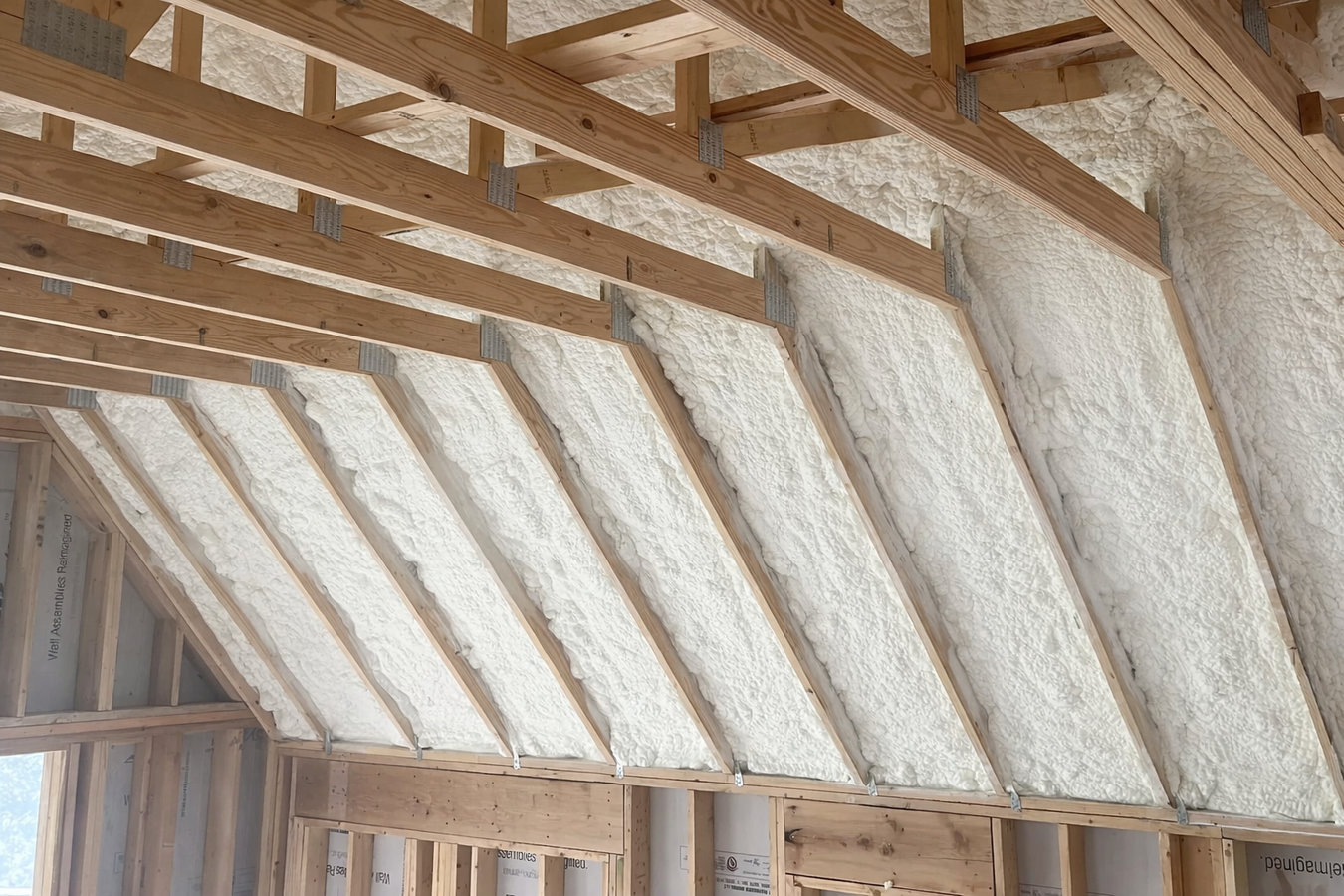
Your AC fights an uphill battle every summer when heat seeps in through walls and attics that are not properly sealed. Closed-cell foam insulates and air seals at the same time - one application, done in one to two days.
Closed-cell foam insulation in Cudahy means spraying a liquid that expands into a dense, airtight foam layer directly into walls, attic spaces, or crawl spaces - most residential jobs take one to two days and the foam creates both an insulation barrier and an air seal in a single application.
Unlike fiberglass batts or blown-in cellulose, closed-cell foam hardens into a rigid layer that does not sag, compress, or absorb moisture over time. That means it does not need to be replaced or topped off years later - what goes in stays effective for the life of your home. In Cudahy, where most housing dates to the 1940s through 1960s and original insulation has often degraded beyond usefulness, this durability is a real advantage. Homes built before 1980 were typically constructed with little to no wall or attic insulation by today's standards, and closed-cell foam can be added to existing spaces without tearing the structure apart.
For homeowners who want to address every gap in their home's envelope, closed-cell foam pairs well with open-cell foam insulation - the two products have different strengths, and using each in the right location produces the best overall result for your home's comfort and energy use.
If your air conditioner is on but south- or west-facing rooms still feel stuffy and warm in the afternoon, heat is getting in faster than your system can remove it. In Cudahy's inland heat, this is one of the most common complaints before homeowners upgrade their insulation. The problem usually is not the AC unit - it is that the home's envelope is not slowing the heat down enough.
Southern California Edison serves Cudahy, and summer bills can climb significantly when a home is poorly insulated. If your bill jumps sharply between spring and summer and you have not changed your habits, your home is likely losing the cooling battle through the attic, walls, or both. Closed-cell foam is one of the most effective ways to reduce that seasonal spike because it stops heat infiltration at the source.
Homes built in Cudahy's main development era - the 1940s through 1970s - were often constructed with minimal wall insulation or with materials that have compressed and lost effectiveness over time. If you have never had an energy assessment and your home is in this age range, there is a reasonable chance you are living with a significant gap in your home's thermal protection.
Hold your hand near an outlet or switch on an outside-facing wall on a hot afternoon. If you feel warm air coming through, your wall cavities are not properly sealed. This is common in older Cudahy homes where the original insulation has settled or was never installed in the wall cavities at all. Closed-cell foam fills and seals those gaps permanently.
We install closed-cell foam in attics, walls, crawl spaces, and basement areas. A trained installer applies the foam in passes until the correct thickness is reached - consistent depth is what makes the application perform as promised, and we measure as we go. Before any foam goes in, we assess the area for moisture or damage that should be addressed first. The crew uses protective equipment throughout, and we give you a specific return time before the job starts so you can plan your day without guessing.
Homeowners who want a full picture of their options can also ask about our spray foam insulation service, which covers both closed-cell and open-cell applications and helps you understand which product belongs in which part of your home. For older homes with multiple problem areas, we often recommend addressing the attic and walls together for the biggest improvement in comfort and energy use.
Best for homeowners whose attic is the main source of heat gain - spraying the underside of the roof deck creates a conditioned attic that dramatically reduces the heat load on rooms below.
Suited for older Cudahy homes with empty or degraded wall cavities where heat is radiating through exterior walls throughout the afternoon.
For homeowners who want insulation and moisture resistance in one application in the spaces below their living areas - particularly useful where moisture is a concern alongside heat loss.
For targeted treatment of the most common air leak locations in older homes, including the band of wood at the top of the foundation and gaps around plumbing and electrical penetrations.
Cudahy sits in the Southeast Los Angeles basin, where summer temperatures regularly climb into the 90s and the marine layer that cools coastal communities rarely reaches this far inland. That means heat infiltration is a year-round pressure on every home in the city - not a seasonal problem that shows up a few times a year. Closed-cell foam's ability to block heat from entering through walls and attic spaces is especially valuable here because even a modest improvement in your home's envelope reduces how hard your air conditioner runs day after day. Many homes in Cudahy were also built on small lots with homes sitting close together or sharing walls, which means heat can transfer not just from the roof but from adjacent structures - a factor a knowledgeable installer will account for when recommending where to focus. The Spray Polyurethane Foam Alliance provides homeowner resources on what to expect from a professional installation.
The same heat and housing stock challenges affect homeowners throughout the area. Residents of Bell and Maywood live in the same postwar homes, deal with the same summer heat, and face the same gap between what their homes were built to do and what they need to do today. We serve both cities and regularly work in homes across Southeast Los Angeles where closed-cell foam is a practical, long-lasting upgrade rather than an exotic option.
Reach out by phone or through our contact form and we will get back to you within one business day. It helps to know roughly what area you want insulated - attic, walls, crawl space - and whether you have had any recent work done on the home.
We visit your home, walk the areas to be insulated, check for moisture or damage that should be addressed first, and take measurements. You receive a written estimate with the scope of work and total price before we leave - not a verbal ballpark.
We confirm whether your project needs a permit and handle the application if it does. We also give you a clear prep list - what to clear out of the work area and how long to plan to be away from home on installation day.
The crew sets up protective sheeting, sprays the foam in passes to the correct thickness, cleans up overspray, and confirms what was done before leaving. You return home the same day - your contractor gives you a specific return time in advance, not on the day of the job.
Free written estimate, no obligation, reply within one business day.
(213) 953-8081Thin spots and gaps mean the air seal is broken and the insulation will not perform as promised. We measure depth as we go and do not rush the application. You get consistent coverage across the entire surface - no shortcuts to hit a faster finish time.
You get a written estimate with a clear scope of work before we schedule installation. We do not change the price without talking to you first. For a product with more variables than standard batt insulation, that transparency is not optional for us.
We give you a specific return time in writing before installation day - not a rough estimate on the morning of the job. If anyone in your household has asthma or chemical sensitivities, tell us upfront so we can plan the job accordingly and give you an accurate timeline. EPA guidelines on spray foam re-entry inform how we plan every job.
Older homes in this part of Los Angeles have specific characteristics - tight lot access, aging building materials, small attic and crawl space clearances. We have worked in homes throughout Southeast LA and come prepared for what we are likely to find, rather than discovering conditions on the day of installation.
Closed-cell foam is a durable, high-performance product - but only when it is applied correctly. The combination of consistent application depth, honest pricing, and local experience is what separates a job that performs for decades from one that disappoints from the first summer.
A softer, more flexible foam option that works well for interior walls and large open spaces where sound dampening is also a priority.
Learn MoreAn overview of both closed-cell and open-cell spray foam options to help you understand which product belongs where in your home.
Learn MoreOur schedule fills up quickly heading into the warm season - call or request an estimate today so your home is ready before temperatures climb.